

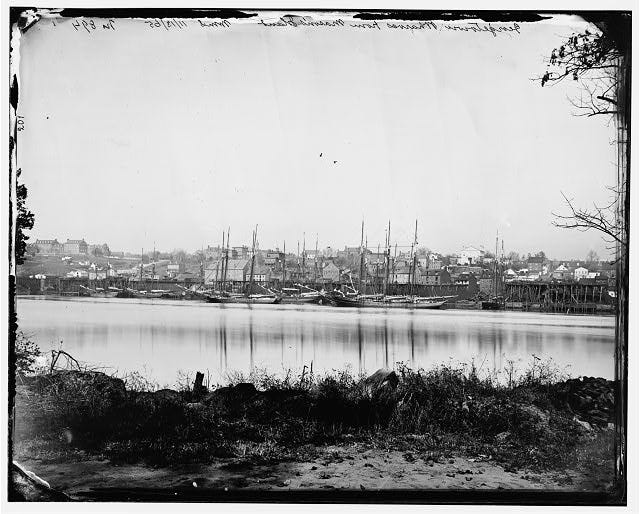
It’s late morning, the fog is lifting revealing a blue-sky. Sailing vessels sitting in the wharf, small waves lapping at the edge of shore, water shifting the wooden ships from side to side creaking with every movement. Shore birds weaving around the dock in search of fish or food dropped by a passerby screeching as they circle around and dive. Each vessel alive with shoremen pulling off cargo from the Atlantic seacoast, the West Indies and from as far away as England. Shouts go out every which way giving direction to those unloading imports and those loading vessels for export. The warehouse is alive with business owners looking for unique wares to add to their shops or restaurants.
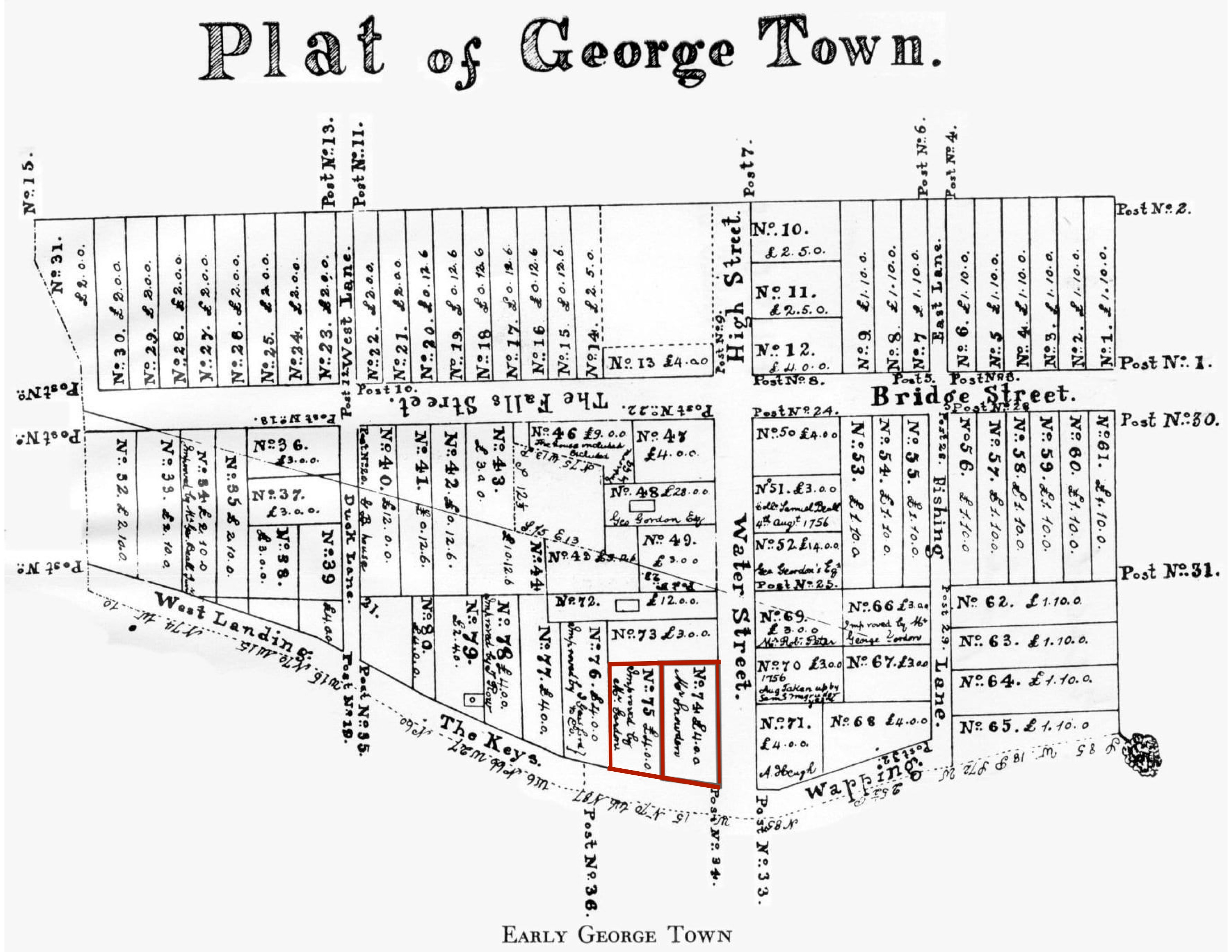
One of the scenes in my historical fiction takes place at the F & AH Dodge Warehouse. (Francis & Alexander H Dodge brothers) located at the Georgetown waterfront at K Street (formerly Wapping Street) and Wisconsin Avenue. This stretch on the water in Georgetown was known as the “Quays” which played an early role as a major port in the District of Columbia.
My Ancestor’s Connection
While researching my ancestor’s small business, I discovered he maintained an account with F & AH Dodge. In 1843, he had an account in the amount of $1,200—equivalent to more than $44,000 today, for the purchase of goods used in his business. This discovery made the wharf and warehouse the perfect setting for a scene in my novel.
The Annual Sale
The Dodge brothers held an annual sale at the wharf and warehouse, which was decorated with imported goods and accompanied by elaborate luncheons served on the platform overlooking the ships coming into the wharf. In my story, my character attends the sale and luncheon. Unbeknownst to him, he discovers someone had arrived before him, under suspicious circumstances, which adds to the tension of the scene.
The Business of Francis Dodge
Francis Dodge Jr. was quite successful running the import/export trade business at the wharf with multiple warehouses. Francis Dodge also purchased vessels and invested in others that came into the lively port of Georgetown, carrying on trade along the Atlantic seacoast, England, and the West Indies. The C & O Canal was also used by Francis Dodge for the transportation of goods. He bought interest in a flour and cotton mill which were situated at one end of town. As a result, flour was among the company’s exports. Some of the other imports included sugar, molasses, tea, coffee, candles, salt, almonds, rum and other liquors— staples of the coastal and transatlantic trade.
Francis Dodge Jr’s younger brother Alexander H, by ten years, joined him in the business operations in 1844. Despite their success, after the passing of Francis Dodge in 1851, the business failed by 1857. The properties were sold. One such property was purchased by the Flour inspector George Shoemaker. His wife Elizabeth also plays a role in my story of a real-life event.
The Building Today
The Dodge Warehouse, built in the late 18th century, still stands today. It is one of the few remaining examples of early waterfront architecture in Georgetown and serves as a physical reminder of the city’s trade past.
I would love to hear about any interesting research facts you have come across lately.
So cool. I can confirm that the Georgetown waterfront is an excellent place to have a very good lunch and contemplate just how hard people once worked there.
I wish I would have known how my ancestor was connected to the building when I was there a few years ago. I have such a deep history in Georgetown.