

Helen died never knowing her biological parents.
She tried for years to find out. She wrote to the convent she was adopted from many times but without success. The birth records were sealed in the 1940’s. Her adoptive parents had become alcoholics over the years and whenever she went to visit them, they asked for money. Emotionally she longed for a connection she wasn’t receiving in her relationship with them. Would finding her biological parents give her what she desperately wanted?
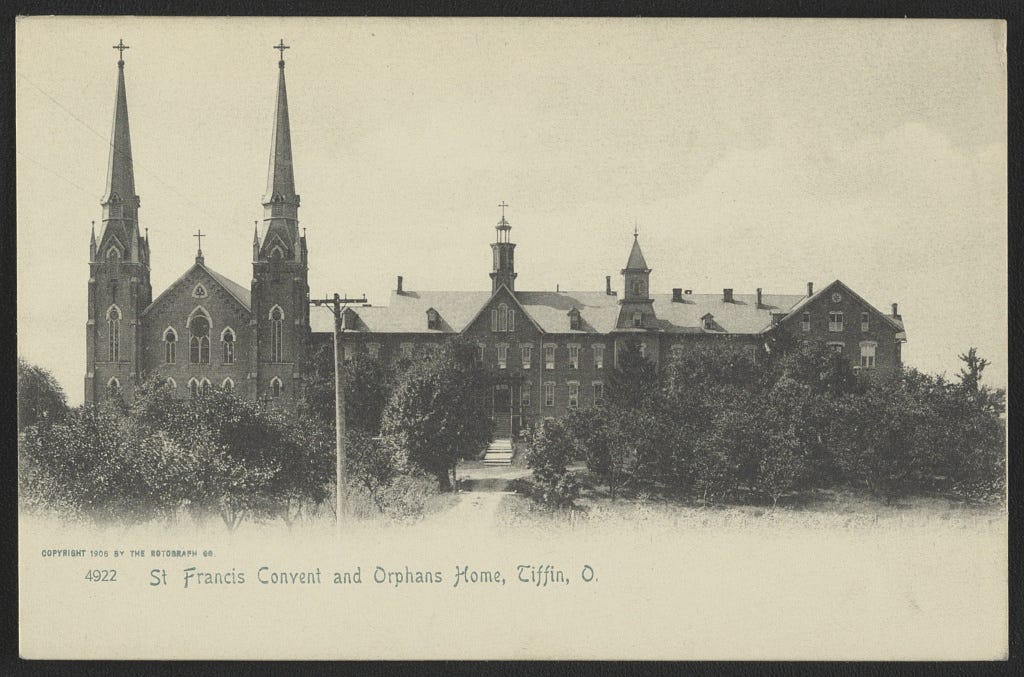
Six years ago, I was asked to help Helen’s son to find her biological parents.
What did Helen imagine about her biological parents as she kept trying to get her birth information? Imagination leads us to fill in the blanks of what the records don’t tell us. I wish we all were fortunate enough to have the journals of ancestors to fill in the blank spaces of their lives. And if you are fortunate enough to have the journal of your ancestor, it may or may not show the full impact of their life in the world around them.
Often the genealogical records are superficial and don’t explore what brought someone to a particular point in their life. Understanding the historical and cultural history surrounding the time period in which they lived is an important part of the story.
As I researched Helen’s family, I discovered that her adoptive mother, Joan, had been married once before. Joan and her first husband had a daughter together. Her husband went off to war. He landed in Normandy and never returned to Joan. Within a year after losing her husband Joan’s daughter died. She faced unimaginable losses in a short period of time.
Joan did remarry and the couple adopted Helen from an orphanage overseen by Catholic nuns in Ohio. The depression had still crippled the country, and her new husband had difficulty finding work. As a result, Joan and Helen lived with Joan’s parents in Virginia and her husband found work in Ohio.
Did Helen know the full story? Did she know her adoptive parent’s trauma? Would it have made a difference. I have no way of knowing but I quickly became invested emotionally in her adoptive parents’ story.
Choosing Empathy
When beginning a genealogical research project, I choose to stay open rather than judgmental. Our ancestors’ lives were complex, just as ours are today. As researchers, when we encounter complicated relationships, difficult decisions, or behavior that appears troubling, it is important to consider the broader historical times in which those choices were made. Doing so can lead to more compassionate, balanced, and historically accurate interpretations of an ancestor’s life.
I’m sure you have heard the adage that context matters. Individual historical records provide only fragments of a person’s experience. A census record may show where someone lived, who they lived with and their occupation. A marriage record, newspaper article, court document, military record, or death certificate may reveal only one event or aspect of their life. These documents on their own rarely explain a person’s private thoughts, emotional struggles, motivations, or the challenges they faced. For Example, why did an ancestor move frequently? Were they on the run, behaving irresponsibly or was it difficult to find work where they lived? Or were there land opportunities far away from where they were living? Did discrimination force them from the area? Without understanding the cultural background, social expectations, and the political and economic nature of the historical period in which they lived we are missing out on vital information.
Personal trauma affects us all. It affects our decisions and frames our pain points as we move through life. An ancestor may have experienced war, displacement, abuse, the loss of children, epidemics, imprisonment, addiction, or long-term illness. My genealogical and historical research of the time has helped me to recognize the greater complexity of human behavior.
My mother was born just as World War two ended. The same rationing and saving of my grandmother’s time engrained in my mother, is also engrained in me. It feels inherited. Insight into the broader context of family members’ lives encourages a deeper understanding of how hardship, resilience, trauma, and social change can influence families across generations.
The bottom line is that Genealogical documents alone don’t reveal the historical context to complete the story.
Helen’s Story
Ultimately, we found the biological mother of Helen but her father wasn’t named. Her biological mother was a teenager at the time of Helen’s birth. The records were finally unsealed and were revealed to the family. I hope my discoveries about the life of her adoptive parents brought new awareness and empathy to Helen’s descendants.
Empathy allows researchers to see ancestors not as perfect heroes or simple villains, but as complicated individuals shaped by their circumstances, relationships, choices, and limitations. By examining historical conditions, comparing multiple sources, and resisting quick judgments, genealogists can create family histories that are both truthful and humane.
Do you think there are family members you might see in a new light if you dug more into their past?
Good advice, Lisa. We also need to be cautious and judicious. Out of respect for those involved and their living descendants, not every discovery needs to be shared nor every story written down.
This was a great read. I’m exploring some similar themes over on my Substack, especially around holding to our values in the present without passing judgment on those in the past, along with inherited trauma, and critically engaging with the past in general. In my work I’m looking specifically at this from a German (and Lithuanian) heritage perspective (my great-grandfather was an NSDAP member, my grandmother was a traumatised war child and refugee). Empathy is important, but not compromising on our values is also important. The tension is hard to sit with.