

In my April 7, 2026, Substack article, I spoke about my genealogical hunt for information about my great grandfather. I was drawn to research deeper into his life due to the stories told to me by my mom, her cousin Gus, and my great aunt Rena. According to my family Clinton was not a good man, but I wanted to know more. I only knew he left my great grandmother and their two young children. At some point, he was living in PA. It was one of my genealogical mysteries concerning this family line. Finding the documents had been a slow process and more of those have come to surface with additional records being digitized over the years. I have also improved as a researcher. To my surprise in the last two years, I have learned more about who Clinton was as a person.
My quest didn’t stop with Clinton. I wanted to know more about his father (George) who immigrated to the US from Frankfurt in the early 1800’s.
As a genealogist, digging deeper to learn why decisions were made by our ancestors is putting the flesh, heart and soul into understanding—to know the fullness of their humanity. The bones are the documents, the basics. Correlating those documents, conducting family interviews for clues, and researching the historical events during their life helped me to discover their humanity and what led to their decisions. I created a timeline putting together all three types of information. This revealed the connections of the history to the documents. Historical newspapers and court records provided much detail showing how these ancestors viewed themselves and how others thought of them.
Family History versus Historical Fiction
Having researched this lineage of my family for many years, I wanted to be able to tell their story in a narrative for my adult children. I knew my children would not dive into the genealogical documents to put the story together. While they are interested in our family history when I tell them what I have learned, genealogy isn’t their thing, and that is okay.
A written genealogy of a family is often factual — names, dates, marriages, children and those children’s children. It comes with well written citations of documentation showing where those documents were found to support the written genealogy. About twenty years ago I wrote about George’s life as an immigrant from Frankfurt. I wanted it to be a narrative and not the typical genealogical Register format which doesn’t provide for the writing of much family detail. But what I wrote was very sterile and quite frankly boring. Yes, the true factual documentation was there as it should be, but it didn’t bring to life who my ancestors were as people and what the world around them was like at the time. As I mentioned in a previous article, the documents only tell part of the story. The history of events gives context to the decisions they mad. It may have even changed the trajectory of their lives.
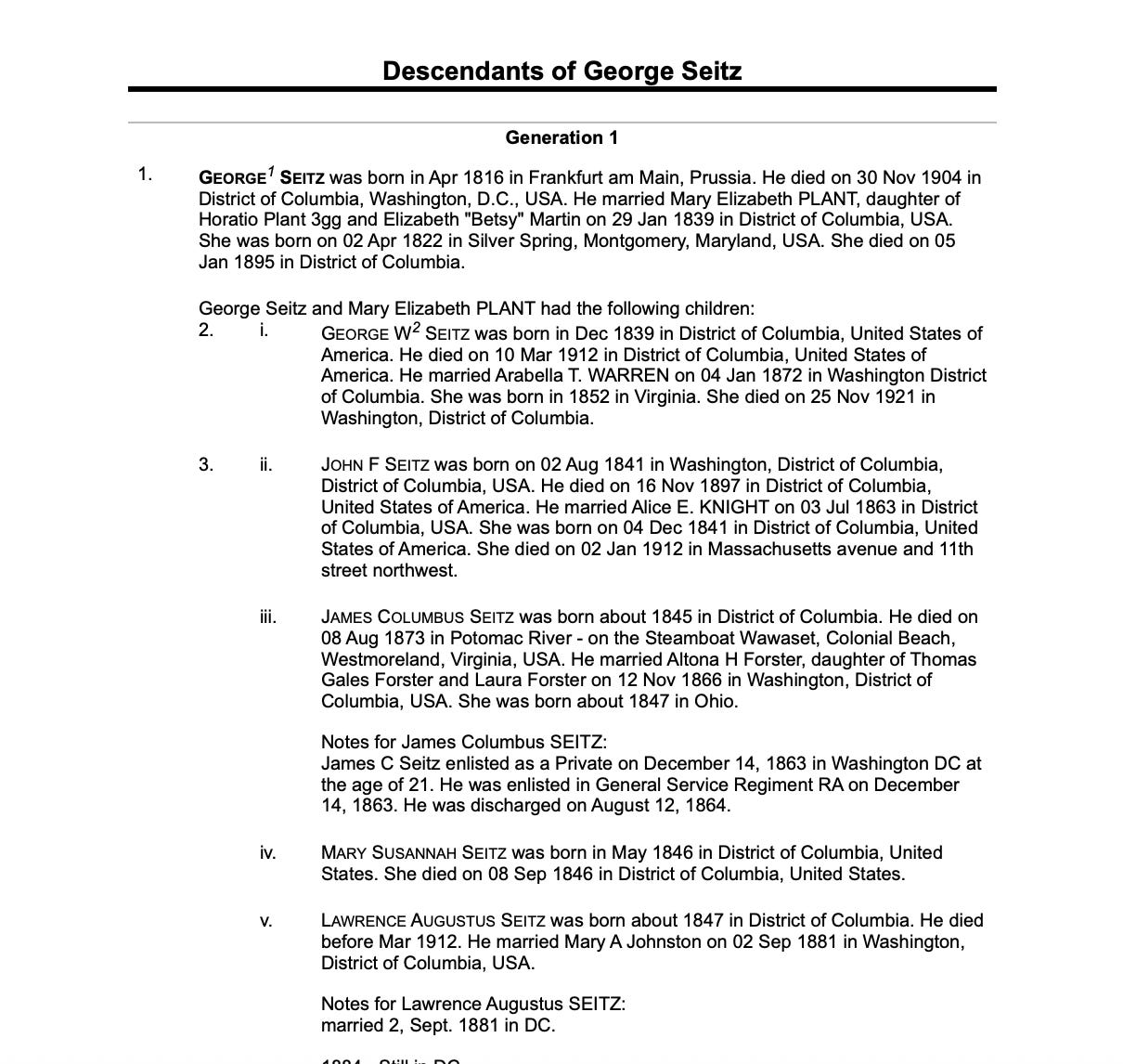
Through the interviews of my family members and the additional research about my great grandfather Clinton, I learned about the emotional story of betrayal, deceit, and his subsequent movements including his death and burial by a neighbor in a charity grave.
I wrote a detailed story about my second great grandparents George Seitz and Mary Elizabeth Plant, and there will always be some unanswered questions. And unless they can talk to me today, those will never be answered. How did George and Mary Elizabeth meet? As far as I could tell they only had their Catholic religion and family members who were brick masons in common. Mary Elizabeth was the granddaughter of a Revolutionary Patriot. George was an immigrant from Frankfurt.
I have heard authors talk about characters revealing more to you as you write about them. The concept was foreign to me until I started my own journey in writing the story of George Seitz and Mary Elizabeth Plant. Now I understand, and breathing life into their history has been deeply rewarding.
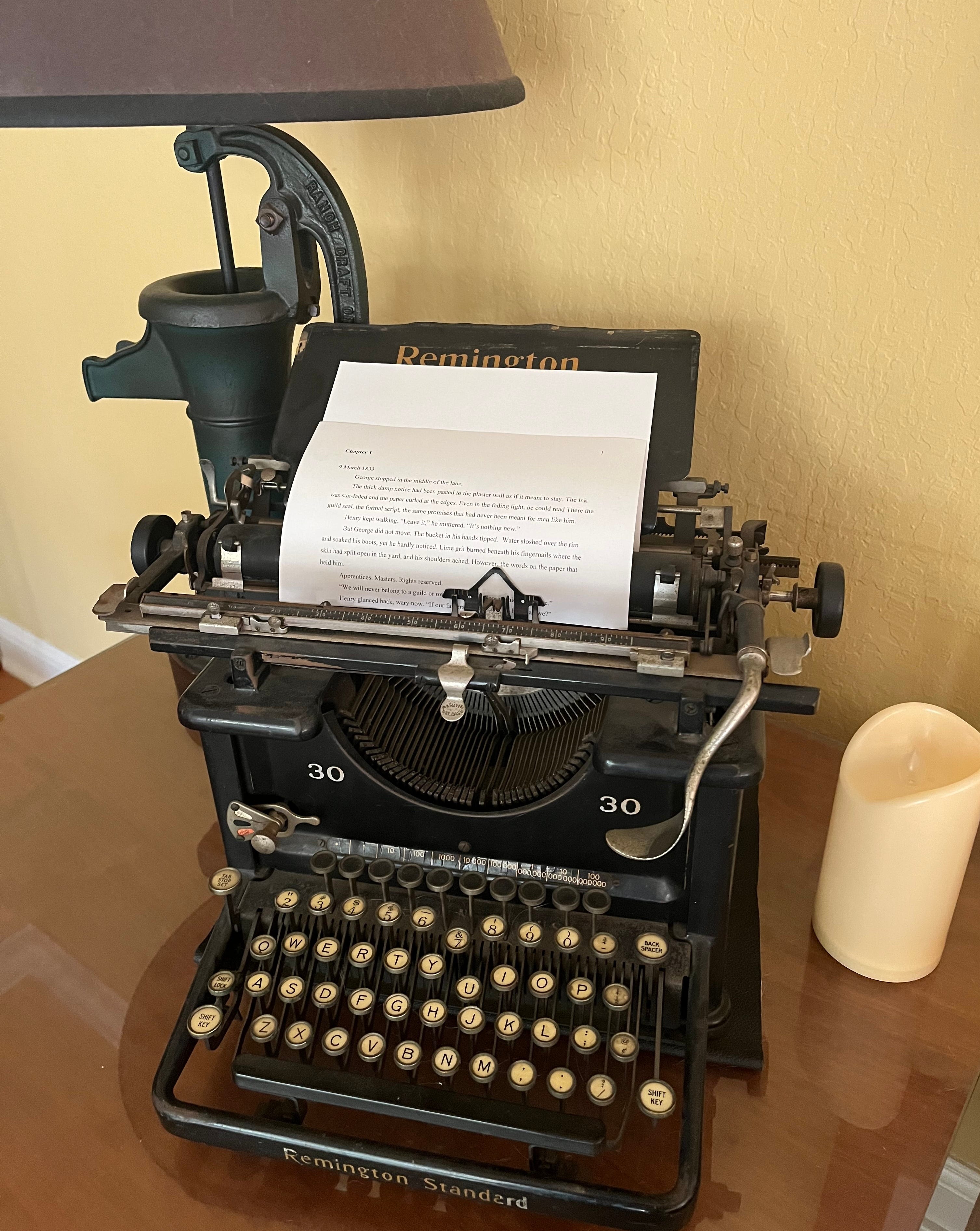
There is no right or wrong way to tell the story of your ancestors. When you think about your ancestors, what does your heart call you to write about?
This - exactly! "I have heard authors talk about characters revealing more to you as you write about them. The concept was foreign to me until I started my own journey in writing the story of George Seitz and Mary Elizabeth Plant. Now I understand, and breathing life into their history has been deeply rewarding."